
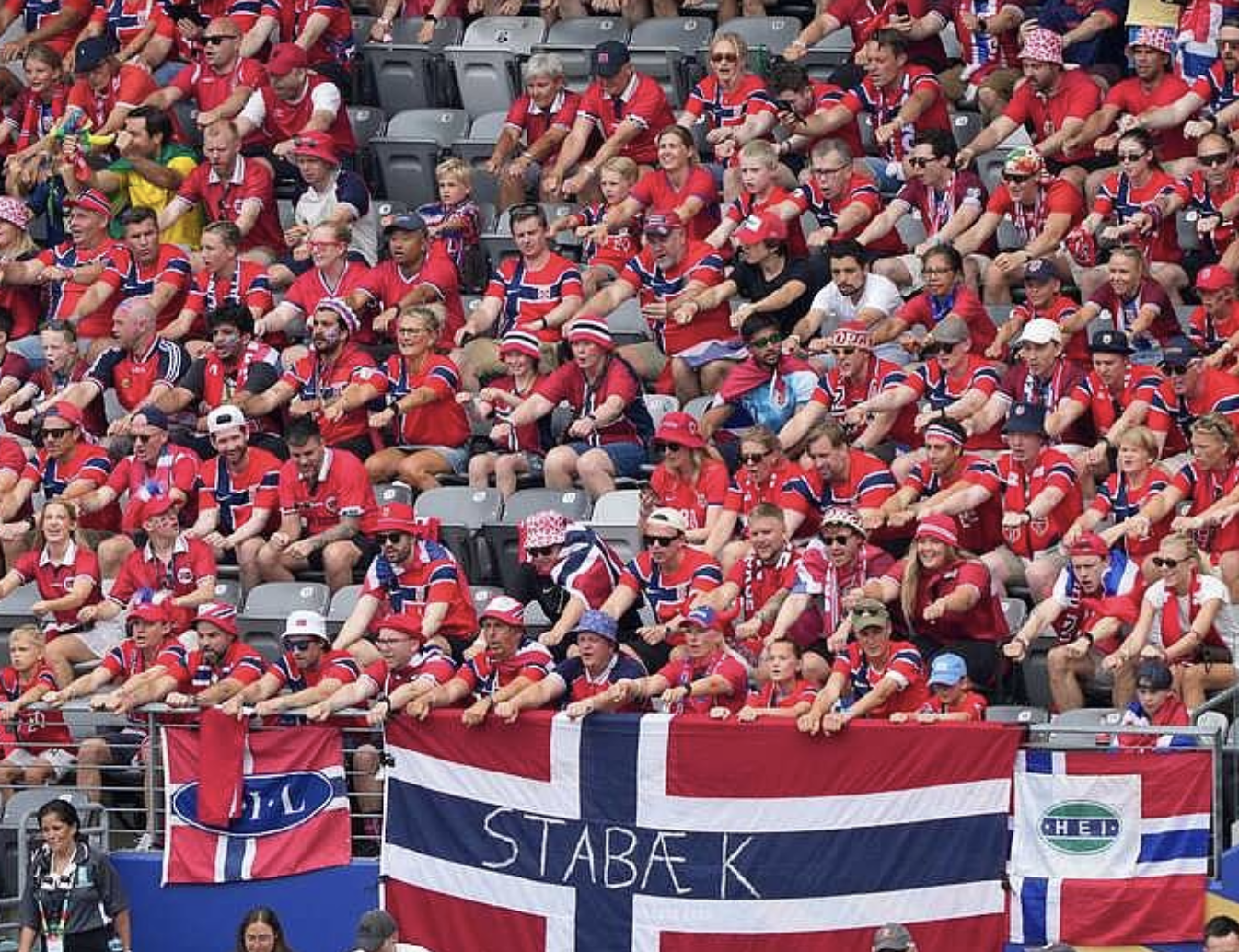
Norwegian soccer fans in their ceremony of “rowing for the team”
Earlier this year, Pope Leo XIV wrote in his Encyclical Letter, Maginifica Humanitas, "In the era of artificial intelligence, when human dignity is threatened by new forms of dehumanization, ours is the pressing duty to remain profoundly human."
I have found myself returning to those words again and again.
Human dignity threatened. Remain profoundly human.
They feel like an invitation to consider what practices and traditions help us remain deeply, fully, joyfully alive and human.
I believe one part of the answer is Ceremony.
When most people hear the word, they think of weddings, funerals, or religious traditions. My definition is much broader and much simpler. My book, The Book of Modern Ceremony opens with, “Ceremony is one of the oldest technologies used by humans to create meaning. As long as we have been living together, we have used ceremony to mark occasions, weave communities together, create meaning, facilitate transformation, and bring the Divine into our lives.” Long before we had books or algorithms or productivity systems, we had ceremony. Every culture found ways to pause, gather, and mark the moments that mattered.
Over the past few weeks, I've been delighted by the ceremonies I see all around us.
Like millions of others, I’ve loved watching the World Cup. I wasn’t focused on the scores or the strategies, I was loving the human stories. I cheered for Cape Verde, and their lovable goalkeeper, Vozinha, a country I had not even heard of weeks before they held the mighty Spain to 0-0 scoreline in group play. You can’t make this up! And, who doesn’t love Erling Haaland, and his band of rowing Norwegians who added so much joy to each game and gathered celebration.
There was ceremony everywhere.
We saw it in the ceremonies before each game: the national anthems being sung, children leading players onto the field, fans draped in the colors of their country. There were chants sung in unison, screams when a ball hit the back of the net, lucky t-shirts worn each game, even the handshakes after the game, one side high on a win, one side dejected.
During the final, I laughed out loud in delight as Shakira performed with the Triplets Ghetto Kids. Their joy was utterly contagious. They danced with the abandon of children in their backyard, not kids dancing their hearts out in front of millions across the world. The entire half time show was a tribute to love and hope, curated by Coldplay’s Chris Martin. Is that not a ceremony with the intention of creating transformation in the world, and the ritual act of dance?
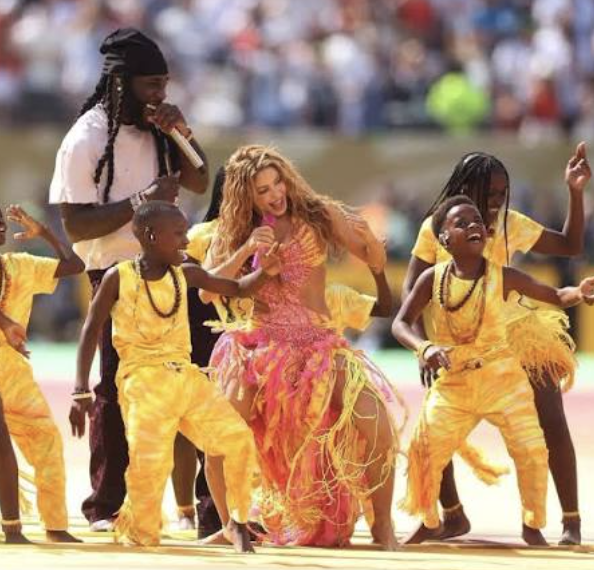
Shakira and the Ghetto Kids dancing in complete JOY
None of these celebrations changed the score. They changed the experience for all of the fans who showed up, and all of us who watched from afar. They brought us together around the world to celebrate, to hold our breath, to laugh and to cry. They allowed us to participate in that particularly human act of collective effervescence that only occurs when we gather, and move our bodies together.
A few days ago, I went to see Christopher Nolan's The Odyssey. I loved it! What an epic tale and journey. What touched me as I sat there in the dark theater was not simply the story of the journey of Odysseus and his men, but the ceremony woven throughout the film. I especially loved seeing people gathered at the Temple of Apollo on the road to Pylos performing various rituals in the Temple. I loved imagining myself living during those times when the gathering places were Temples instead of bars, and our shared acts were rituals. And it wouldn’t be an epic tale without a sacrifice of lambs, in this case a way to get in touch with the dead. Nolan handled the ceremony that was an ubiquitous part of life in Homer’s time with the right touch, showing it not as a special event, but as a constant practice that touched the lives of the common people and the gods.
Then my friend Cara sent me a podcast called Where the River Took Us, a heartbreaking account of a family who lost their two-year-old son in the Texas floods of 2025. As they searched for a way through unimaginable grief, the family, instinctively turned toward ceremony. They gathered by the river and set off white balloons. They marked birthdays for a child that was not there. They found symbolic ways to honor his life together. When words were not enough, ceremony helped carry what language could not, creating meaning for them, when they felt they had lost it.
And finally, I attended a funeral this past weekend, for a beloved community leader and his stepson. Both taken tragically in a car accident, both far too young. As hundreds gathered to mourn and grieve the loss, the quiet rituals of the Catholic faith, including a communion for anyone who wished to receive a blessing, homilies given by close friends, and group recital of the Lord’s Prayer, revealed the power of ceremony. It provided a container for our grief, and a way to step outside of ordinary time allowing us to mark the lives of these two men, and help us on our transition to a world without them.
What is it that unites these experiences? What are the essential elements of ceremony? They are simpler than you might think.
I believe ceremony consists of three simple components.
It begins with intention: A clear statement of what we are wanting to mark or transform through ceremony.
It deepens through attention: We step outside the ordinary flow of time and move into liminal space. A place where we are able to open ourselves to forces, feelings, or elements we are not open to in our busy daily lives. We make space for the extraordinary.
Finally, it finds expression in a ritual act: This can be as simple as lighting a candle, offering a blessing, writing down a wish, releasing a balloon, planting a tree. The act itself is often ordinary, but it symbolically represents something for us: an ending, a beginning, a connection, a transformation. What makes it powerful is the presence we bring to it.
If you look closely, you will see ceremony everywhere. The rituals change from culture to culture and generation to generation. The human need does not.
For me, it is the moment of silence before I open my computer to write, consciously opening myself to any ideas that want to come through. It is sitting patiently under my Oak tree, day after day, letting her quiet, ancient wisdom reach me in every fiber of my being. It is placing my hand on my heart when I feel unsure, to see what my body has to tell me. It is calling in ancestors and guides before each match that Tristan plays, asking them to rest on his shoulders, quicken his feet, and guide the balls in.
Ceremony lives in each of us, and is strengthened each time we set an intention, give it attention, and perform a small ritual act. When I practice ceremony, my body relaxes, my mind softens just a bit, and I zoom out to feel myself part of something much bigger than me. A peace settles on me that was not present before. I often feel or hear an inner wisdom whispering to me. I feel connected to everything around me, and not alone.
As our world becomes faster, louder, and increasingly shaped by powerful and distracting technologies, I believe our oldest human practices become even more valuable. They remind us to slow down, to gather, to celebrate, to grieve. They help us transform ordinary moments into meaningful ones.
In what ways do you practice the art of ceremony? Do you breathe in gratitude with your first sip of morning coffee? Do you thank an ancestor living or dead for the gifts you have in your life? Do you approach your evening walk with awe and wonder?
We do not need to reinvent ceremony, we need to reclaim it. Remember it. And remember that we each have a birthright to ceremony, no matter what our lineage.
As I look around, I find myself noticing ceremony everywhere.
I wonder where you'll begin to see it.